
Deck rehab and restoration in St. Louis
We save your deck. You save thousands. When the framing and footings under your deck are still sound, tearing the whole thing out is the expensive way to solve the problem. A deck rehab keeps what is holding up and replaces what has failed, for 25 to 60% less than a full replacement.
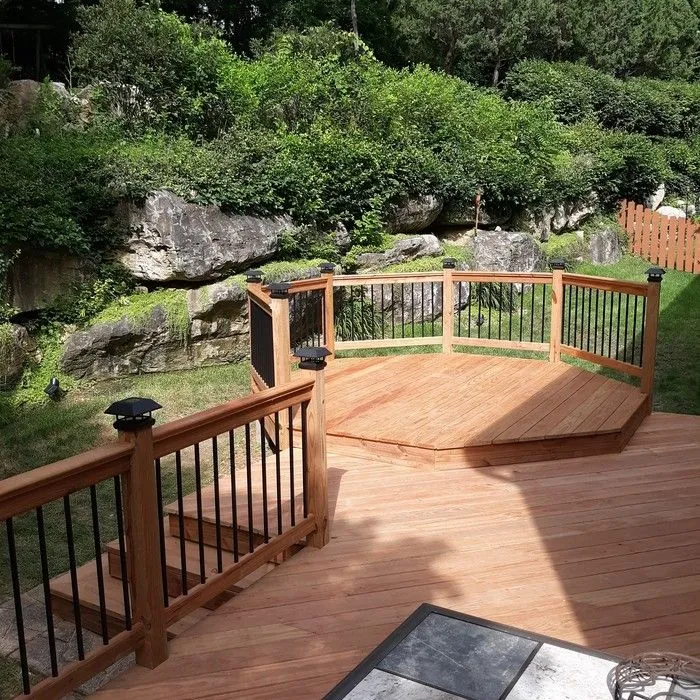 Deck rehab & restoration
What a deck rehab actually is
A deck is really two things stacked on top of each other. Underneath there is the structure: footings, posts, beams, joists, and the connection to the house. On top there is everything you see and touch: the decking, railings, stairs, and trim. The weather gets to the visible half first, which is why a deck can look completely finished while the half doing the actual work is still in good shape.
A deck rehab treats those two halves separately. We assess the structure honestly, repair or reinforce whatever in it has failed, and then replace the visible material on top. What you get back is a deck that is new where it counts and original where original is still strong. Same footprint, same layout, and as good as a new build, because everything that would not have lasted another twenty years has been replaced.
A replacement pays to throw away the parts of your deck that are still working. A rehab pays only for the parts that stopped.
How much a deck rehab saves versus replacing
Two numbers come up on our estimates over and over, and both of them stay in your pocket.
When the bones are good, rehabbing an existing deck runs 25 to 60% less than tearing it out and building new. And when the trouble comes down to one failing beam, post, or footing, a targeted structural repair can land up to 75% under the cost of a whole new deck.
The difference is easy to trace. A replacement pays for demolition, disposal, new footings, new framing, new everything, and weeks of crew time in your yard. A rehab skips most of that, because most of that is already behind your house and still doing its job. You are paying for the material that failed and the skill to swap it out cleanly, and that is a much shorter list.
- Everything demolished and hauled away
- All-new materials, top to bottom
- New footings and framing you may not have needed
- Your backyard is a job site for weeks
- Sound structure thrown out with the rest
- Keep the framing and footings that are still solid
- Replace only what has actually failed
- Less demo, less waste, less hauling
- Days on site, not weeks, so you get your yard back
- Typically 25 to 60% less than a full replacement
A St. Louis deck rehab, start to finish
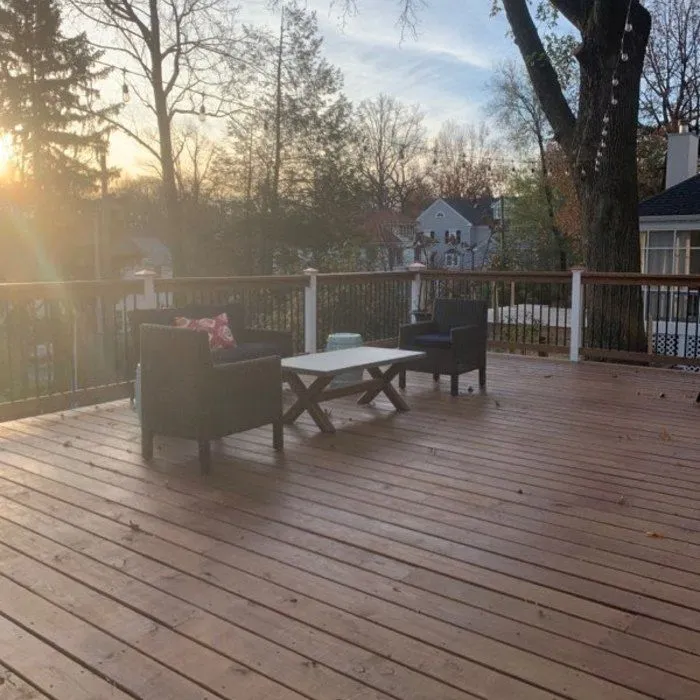
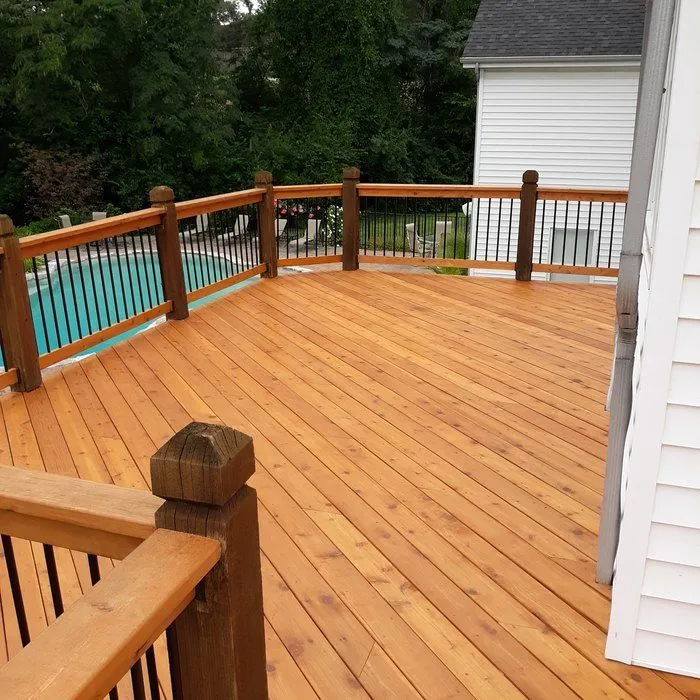
This deck was one estimate away from being torn out. The structure underneath was sound, so it stayed.
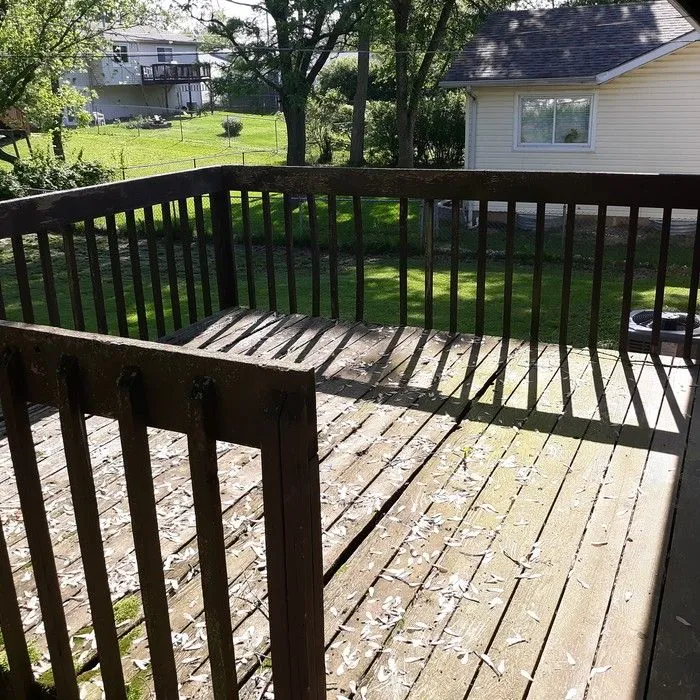
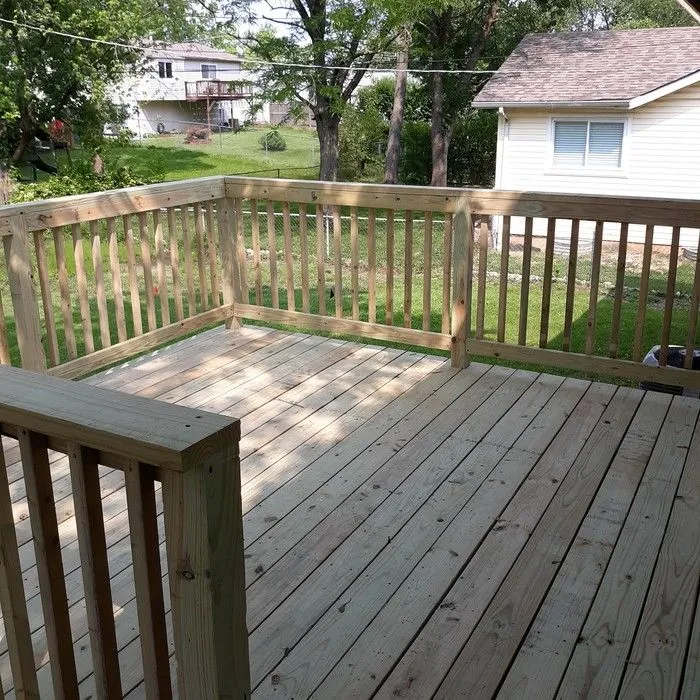
Original framing kept · failed members replaced · decking & railings rebuilt to code
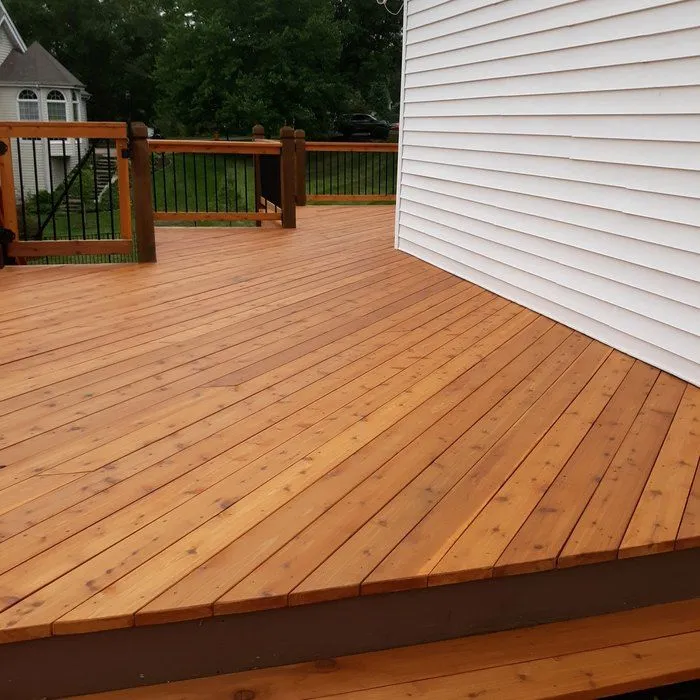
When a deck rehab is the right call
A rehab is on the table whenever the structure is still carrying its load. In practice that usually looks like this:
- The footings and posts are stable and set correctly
- The framing is sound, or the failures are limited and reachable
- The problems are in the decking, railings, and stairs
- The deck attaches to the house properly, or can be corrected
- The layout still works for how you use the yard
Hit most of those and a rehab will almost always be the better outcome, on cost and on time.
When we will tell you to replace instead
Here is the standard we hold ourselves to: we will not rehab a deck that would not last as long as a brand new one. If yours genuinely needs to be replaced, we will say so plainly at the estimate, with the reasons in front of you.
The vast majority of the time, it does not. Most decks have good bones and just need the right work to bring them back to solid, safe, and good for decades. Three things decide how long that lasts: the materials, the location, and how well you keep up with it. Keep up with it and you are looking at 20 years.
What we keep, and what we replace
Every rehab is scoped from what we find on the deck, but the split usually falls out like this.
Usually kept
- Footings that are stable and correctly set
- Posts and beams still carrying their load
- Sound joists and blocking
- A ledger that is properly attached and flashed
- The footprint, layout, and elevation you already like
Usually replaced
- Decking that has rotted, cracked, cupped, or splintered
- Railings, posts, and balusters, brought to current code
- Stair treads, stringers, and landings
- Individual joists and hangers that have failed
- Fasteners and hardware that have corroded
The structural work that makes a rehab possible
A rehab is only honest if somebody actually gets under the deck and is willing to fix what they find. Replacing a beam or a rotted support post is highly technical work, and it is genuinely dangerous. It can mean carrying the full weight of the deck on temporary supports and working underneath it while you do. That is exactly why a lot of companies skip past it and recommend a replacement instead.
We take that work on. It is the reason we can look at a deck another company wrote off and tell you it is worth saving, and it is where the biggest savings on this page come from. A structural repair done right can hold a deck for years at up to 75% less than a full rebuild. See how we approach structural deck repair.
What a deck rehab looks like for you
We walk the deck together
You tell us your goal, we get underneath, and you find out what is actually failing. The estimate is free.
You get options, cheapest included
Safe and usable again, solid enough to forget about, or ready to pass an inspection. You pick the outcome.
Days on site, not weeks
Far less demo and hauling than a rebuild, which means less noise, less mess, and your yard back sooner.
Free estimates on every project, with a clear look at what your deck actually needs.
Deck rehab across St. Louis County and St. Charles County
Deck rehab takes us all over the western and central metro. In West County that means Ballwin, Chesterfield, Ellisville, Wildwood, Town and Country, Des Peres, Creve Coeur, and Maryland Heights, plus Valley Park, Eureka, Grover, and Pacific. Mid County brings Kirkwood, Webster Groves, Brentwood, Clayton, and Richmond Heights, where decks tend to be older and the savings from rehabbing rather than replacing tend to be larger. South County adds Mehlville and Oakville, and we work across St. Charles County too.
If your deck has you weighing repair against replacement, that is exactly the conversation the free estimate is for. See the full service area, or start with deck repair if you already know what failed.
Find out what your deck is worth saving.
Send a few details and we’ll walk your deck with you, free, and show you what a rehab would take versus what a replacement would cost.